
Get to know AI Safety Foundation's partners for the inaugural AI Safety Week, Nov. 9-13 in Toronto.
Our Only Human series spotlights the real people working on AI safety.
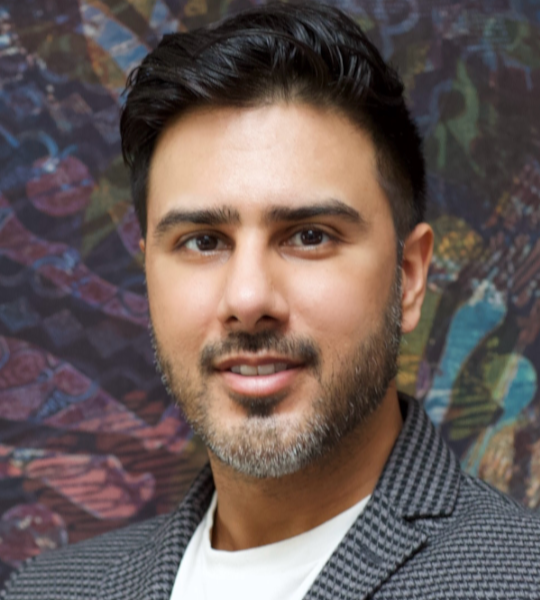
First up is Ankesh Chandaria, CEO of the AI Safety Foundation, where he works to advance public understanding and practical responses to the risks posed by increasingly capable AI systems. His broader work focuses on AI governance and the societal implications of transformative technologies, with interests in institutional design, accountability and decision-making under uncertainty. He is also a strategy advisor and former solicitor and is completing a Master's in AI Ethics and Society at the University of Cambridge.
1. Why does AI safety matter to you?
My interest in AI safety stems from a broader interest in how we build and govern powerful technologies and the choices we make about the role they should play in our lives. I'm excited by the transformative potential of AI, but as these systems become more capable, the choices we make about how they are designed, developed and deployed become more consequential.
We need to take seriously both the harms we can already observe and longer-term risks that are harder to predict, including some that could have catastrophic consequences. For me, the challenge is not to assume a particular future, but to build the knowledge, safeguards and institutions needed to navigate a range of possible futures responsibly.
2. What's one thing that's surprising to you with respect to AI safety?
One thing that surprised me when I began working more closely on AI safety was how much disagreement there is about what the term itself encompasses. For some, it primarily means technical questions such as alignment, control and evaluating frontier AI systems; for others, it also encompasses misuse, governance, societal resilience and broader impacts.
I think a plurality of perspectives is healthy. These problems do not fit neatly within disciplinary boundaries and approaching them from different perspectives can challenge assumptions, expose blind spots and ultimately help us find better solutions.
3. Why should we care about AI safety?
AI systems can already perform tasks that would have seemed extraordinary only a few years ago, and we are rapidly expanding what we ask them to do. That creates enormous opportunities, but also new ways for things to go wrong, from harms we can already see to very serious risks that are difficult to predict.
We should care about AI safety because the choices being made now about what we build, deploy and delegate to these systems will help determine both the benefits we realize and the risks we face. Taking safety seriously is not pessimism about AI. It is a necessary part of developing powerful technologies responsibly.
4. How does AI safety fit into the broader conversation about AI and society?
I see AI safety as an important part of the broader question of how we want to develop, use and live with increasingly capable AI systems. Severe and catastrophic risks deserve serious attention, and they are connected to questions about accountability, economic disruption, democratic institutions, concentration of power, human relationships and how AI's benefits are distributed.
These concerns are far from mutually exclusive, and in many cases, they are deeply connected. I don't see safety and ethics as competing agendas: both are ultimately concerned with the choices we make about powerful technologies, what we ask them to do, and the constraints and responsibilities that should accompany those choices -- with the aim of improving lives today and building a better future.
5. What can someone who's interested in AI safety do next to get involved?
A good first step is simply to learn more and form your own view. You do not need to be an alignment researcher or computer scientist to contribute: AI safety also needs people working in law, public policy, economics, ethics, communications and many other fields.
Think about where your existing expertise intersects with a problem you care about. At the AI Safety Foundation, we try to make leading research accessible to a broader public so that more people can understand the issues, form their own views and identify where they might contribute.
This November, The Hinton Lectures will bring a leading researcher to audiences in person and online, while AI Safety Week will convene researchers, policymakers, journalists and others through a week of events in Toronto.
Stay tuned for more inaugural AI Safety Week | Only Human partner profiles. Join us Nov. 9-13.